Stormwater Management
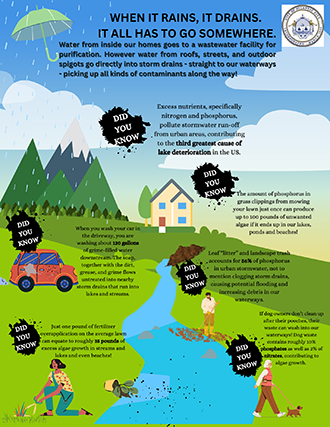
Precipitation that reaches the ground either returns to the atmosphere by evapotranspiration (becomes water vapor); infiltrates into the ground below the root zone (becomes groundwater); or flows along the ground surface (becomes runoff). When precipitation is prevented from reaching the ground due to impervious surfaces such as roofs and paved surfaces, almost all of the precipitations turns into runoff. Stormwater runoff picks up a variety of sediments and pollutants as it flows from rooftops, over paved areas and bare soil, and through sloped grass and wooded areas. Stormwater runoff can flow into a Municipal Separate Storm Sewer System (MS4) or directly to a lake, stream, river, or wetland.
Storm sewer systems include catch basins (inlets), which allow runoff to enter the MS4; culverts (pipes), which transport stormwater runoff; Best Management Practices (BMP), which manage stormwater runoff; and outfalls, which allow stormwater to return to the environment.
BMPs control the rate of flow and/or improve the quality of stormwater runoff, depending on how they are designed. They can also recharge groundwater systems. Not all portions of the MS4 include BMPs. In some areas untreated runoff is released from outfalls directly into the water bodies we use for swimming, fishing, and providing drinking water. In an effort to prevent harmful pollutants from being washed or transported into our natural water bodies through an MS4, federal and stormwater regulations require MS4 operators to obtain a National Pollutant Discharge Elimination System (NPDES) permit and implement a stormwater management program.
Management of stormwater is not only critical to our environment, it is critical to our own health and well-being. Simply capturing stormwater runoff and discharging it into our streams can be detrimental to us and our environment because it:
- Fails to recharge our groundwater aquifers
- Causes downstream flooding
- Erodes the streambanks and scours the streambed
- Dumps sediment and pollutants into our streams
Population growth and the development of urban/urbanized areas are major contributors to the amount of pollutants in the runoff as well as the volume and rate of runoff from impervious surfaces. Together, they can cause changes in hydrology and water quality that result in habitat modification and loss, increased flooding, decreased aquatic biological diversity, and increased sedimentation and erosion. The benefits of effective stormwater runoff management can include:
- Protection of wetlands and aquatic ecosystems
- Improved quality of receiving waterbodies
- Conservation of water resources
- Protection of public health
- Flood control
Atlantic City is required to not only regulate the activities of developers, but to manage its own stormwater system in such a way as not to pollute our streams. We must also have an active public participation and education component in the program. As you may have noticed storm sewer inlets have now been labeled to let everyone know that they drain directly to our waterways.
Please help all of us reduce runoff and keep our waterways clean. Remember if it is on your lawn, driveway, or in the street, it will eventually make its
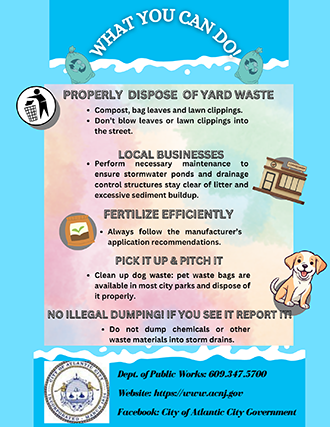
way into our streams. Here are some examples of what you can do at home:
- Reduce impervious surfaces by using pervious pavement, pavers or bricks rather than concrete or asphalt for a driveway or sidewalk.
- Divert rain from paved surfaces onto grass to permit gradual infiltration.
- Connect downspouts carrying roof runoff into dry wells for recharging groundwater.
- Install rain barrels under downspouts to capture rainwater for later use in your gardens.
- Landscape with the environment in mind. Choose the appropriate non-invasive plants, shrubs and trees for the soil in your yard; don't select plants that need lots of watering (which increases surface runoff), fertilizers or pesticides.
- Maintain your car properly so that motor oil, brake linings, exhaust and other fluids don't contribute to water pollution.
- Never dump litter, motor oil, animal waste, or leaves into storm drains or catch basins.
- Follow all waste disposal rules.
- Help keep your local catch basins clean and functioning by picking up debris along the street that will otherwise be washed into the basins with the next storm. Avoid raking leaves into the street where they could wash into and clog the catch basins.
Managing stormwater to reduce the impact of development on local watersheds and aquifers relies on minimizing the disruption in the natural flow - both quality and quantity of stormwater. By designing with nature, the impact of urbanization can be greatly reduced.
This can be accomplished by following these principles:
- Minimizing impervious surfaces;
- Maximizing natural areas of dense vegetation;
- Structural stormwater controls such as stormwater management basins and
- Practicing pollution prevention by avoiding contact between stormwater and pollutants.
PRIVATE STORM DRAIN INLET RETROFITTING
ORDINANCE NO. 14 - RIVATELY OWNED SALT STORAGE
IMPROPER DISPOSAL OF YARD WASTE
IMPROPER DISPOSAL OF WASTE & ILLICIT CONNECTION TO STORMWATER SYSTEM